
The contracts that emerged after educators in Andover and Newton went on strike shined a light on the outlandishly low wages paid to paraeducators and to the vital services they provide school districts.
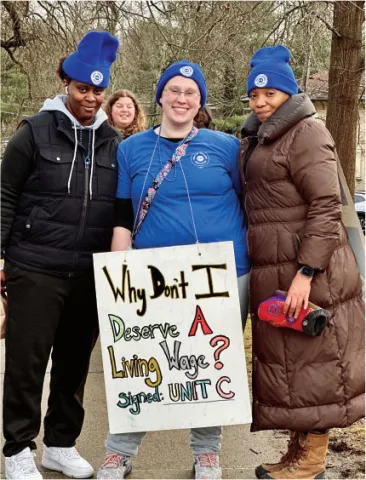
The fact that Andover and Newton, two wealthy communities, had been offering paraeducators starting salaries of $24,500 and $27,000 respectively shocked many when they heard those figures.
The Andover Education Association voted to go on strike on Nov. 9 and reached an agreement with the Andover School Committee on Nov. 14. In Newton, the city’s school committee and the Newton Teachers Association bargained for more than 16 months before the union took a strike vote. The action lasted for two weeks, concluding with a contract agreement on Feb. 2.
Throughout their unions’ respective job actions, the instructional assistants, or IAs, in Andover, and the behavioral therapists and teaching aides, known as "Unit C" in Newton, shared stories about the challenges they faced on the job, the necessity to have multiple jobs to make ends meet and the difficulty districts had in filling the positions because of the low pay being offered.

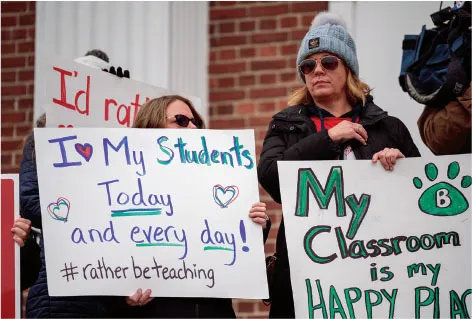
Throughout the state, contracts being settled increasingly address the issue of whether Education Support Professionals are earning a living wage.
"Over the years, the role has changed drastically," said Karen Torres, an IA in Andover for 17 years, who served on the AEA’s bargaining team.
When she started the job, the expectation was to help classroom teachers set up projects or grade tests, Torres said. But with students needing increased support for social and emotional needs, as well as help meeting academic expectations, the IAs became the frontline workers for delivering special education services.
"The responsibilities grew. The compensation did not. And the recognition did not," Torres said.
Holly Currier, an IA who served on two consecutive AEA bargaining teams, said the union started a living-wage campaign in 2020. Despite doing everything possible to challenge the school committee’s low-wage offers, the union could not get the committee to budge.
"The law is not designed in a way to empower us," Currier said.

The fight to boost wages for instructional assistants took on more significance the more Currier thought about her own mother, also an IA in Andover.
"I saw how many people retired and were not able to live," Currier said. "My mum is heading toward retirement, and I want her to have a chance, just a shot, at maybe retiring with some level of dignity that was not possible before."
By the final year of the contract secured in Andover, starting salaries for IAs will be $39,142, up from $24,537. The top pay step for IAs at the end of the contract will be $50,103, almost $10,000 more than before.
In Newton, Unit C members were outspoken about the need to boost wages. Many of the behavioral therapists and teaching aides told of having master’s degrees in the areas of expertise they needed to work with students in need of significant support. Yet most members said they needed to work multiple jobs to survive and explained how the low pay made it difficult for their schools to fill vacancies.
The Unit C pay scale varies depending on a position’s number of hours and location. As a result of the new contract, many full-time Unit C members will see starting wages in March 2027 of $36,778, representing a 30 percent hike. Additionally, Unit C members will receive the same pay raises negotiated by other NTA units (a total of 12 percent over the four-year deal) plus elimination of some wage steps and additional annual payments of $250 to $500 over the contract’s life.
Janette Patel, an NTA bargaining team member who represented Unit C educators, said she remains concerned that in the middle school where she works, the positions going unfilled will still only have about $30,000 as a starting salary in the second year of the new contract.
"We are missing five aides in our school and recruitment is extremely difficult," Patel said. "Administrators complain that when they offer jobs to suitable candidates, those candidates are shocked at the low wage and don’t want the job. Even with this contract, the starting wage has not increased sufficiently to attract applicants. We are left with the same problem – low wages."
Valerie Brunache Lewis, who also represented NTA Unit C members at the bargaining table, agreed that attracting applicants will remain a struggle. But Brunache Lewis saw progress in the contract settlement.
"It’s a step in the right direction, with so many improvements made overall," Brunache Lewis said. "And it’s also a victory that the community is now more aware of the role that Unit C plays in the schools."
Visit the MTA’s YouTube channel at youtube.com/@massteacher, to watch more of MTA Today’s interview with Andover instructional assistants.