The year was 1845. James Polk was sworn in as the 11th president of the United States. Texas became the country’s 28th state. A potato blight led to the Great Famine in Ireland, setting off a wave of Irish immigration to the U.S. And on November 24, 85 educators — all men — met in Worcester at Brinley Hall to establish the Massachusetts Teachers’ Association, as it was then called. That meeting was at the behest of the Essex County Teachers Association, which had been founded in 1830 and was the first county association in the country.
Times have certainly changed since the organization’s founding, but the MTA is still going strong after 175 years. Throughout its history, members of the association have supported their students through major upheavals, including the Civil War, World War I and World War II, the Great Depression and the Spanish flu pandemic of 1918, which claimed the lives of about five out of every 1,000 U.S. residents. They are continuing to do so in the face of the COVID-19 pandemic of 2020.
In 1845, "practical" male teachers were allowed to join the MTA for a fee of $1 a year while female teachers were allowed only to become honorary members.
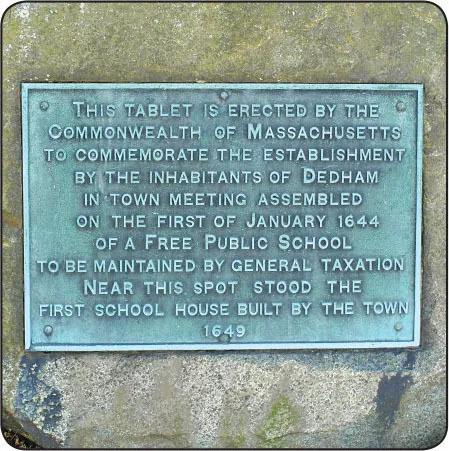
The mid-19th century was a period of great change for public education in Massachusetts. There were a number of publicly funded schools in Massachusetts from Colonial times, including in Dedham, where the first taxpayer-funded school in the country was authorized in 1644. (Boston Latin, the oldest continuously operating public school in the nation, was run out of private residences until it moved into a schoolhouse in 1645.)
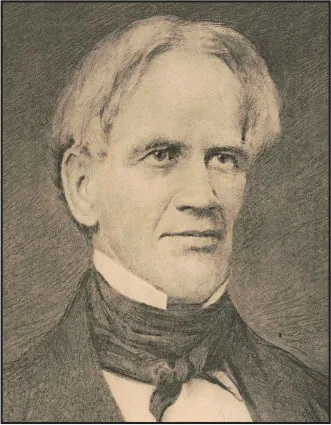
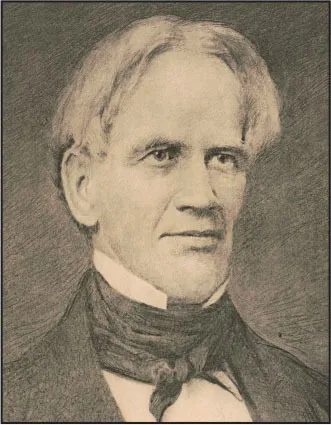
It wasn’t until the mid-19th century that Massachusetts had a statewide system of free, universal public education. The champion of that system was Horace Mann, a lawyer and Massachusetts state senator who in 1837 became the first secretary of the newly established Board of Education. Mann propounded six main principles of education for what were then called "Common Schools" that still resonate today:
(1) Citizens cannot maintain both ignorance and freedom;
(2) This education should be paid for, controlled, and maintained by the public;
(3) This education should be provided in schools that embrace children from varying backgrounds;
(4) This education must be nonsectarian;
(5) This education must be taught using tenets of a free society; and
(6) This education must be provided by well-trained, professional teachers.
The Common School movement spread across the country. Then, as now, Massachusetts was in the vanguard of public education, having passed the nation’s first compulsory education law in 1852.
In an address to the MTA’s Annual Meeting of Delegates, held at Faneuil Hall in Boston and recounted in the periodical The Massachusetts Teacher in 1854, a key speaker, identified only as "Mr. Wells" but likely a leader of the association, said, "If there is a portion of the world in which the blessings of a free and universal education are more fully enjoyed than in any other, I trust we may say, without boasting, that place is Massachusetts."
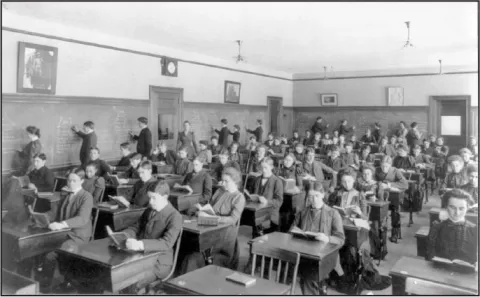
As more schools were developed, more female teachers were hired, beginning in the 1850s. According to a history of public education produced by PBS, despite low salaries and poor working conditions, "Still, women flocked to teaching. Not only were they grateful for the salary, however meager; they also welcomed the independence and sense of purpose teaching gave them. … Teaching gave women a window onto a wider world of ideas, politics and public usefulness."
In his address, Mr. Wells described some of the working conditions that prevailed at the time: "The labors of many teachers, if faithful in the discharge of their duties, are so constant and arduous during the day, that they have no strength left, at the close of school hours, either for personal improvement, or for a review of lessons to be heard on the following day." The problem? "There are many respectable schools in Massachusetts in which the number of pupils is as great as 60 or 70, and even 80 or 90, for each teacher."
Given that large number, it is not surprising that another article in The Massachusetts Teacher that year focuses on "The Evils and Remedies of Whispering, or Communicating in School." In this "prize essay," Mr. Daniel Mansfield of Cambridge complains of students "whispering" about such matters as "the next sleigh ride, the new bonnet of one, and the shabby dress of another." If all 60 students in a class whispered twice an hour during a three-hour half-day session, then there would be "360 whispers in one session" — an intolerable distraction.
In addition to focusing on how to improve the lot of teachers, the early MTA publications focused on fundamental issues of pedagogy.
One example is a Massachusetts Teacher article from February 1854 titled "Teaching to Think." It begins, "However immature his mental capacities or unripe the more primary processes of development, the pupil must be taught to think. … The widest compass of the instructor’s field of toil is to furnish food for the mind, present inducements to energy, supply the higher impulses to an elevated course of acquisition, and to precede the pupil with the aids of demonstration and explanation. Impart mind, or give thought — he can do neither."
These were among the areas covered in new institutions known as "Normal Schools," which were experimental teacher training schools established during Mann’s tenure at the Board of Education. If public schools were going to be required in communities throughout the state, more teachers would have to be trained. The first state-supported Normal School in the country was founded in 1839 on the northeast corner of the historic Lexington Battle Green. It later moved and evolved into Framingham State University.
In the 19th century, the MTA fought for such progressive education ideas as physical fitness programs for students, special education for the handicapped, programs to address school dropouts, and a state tax to help poor school districts. Parallels can be found today, as the MTA is currently fighting for a bill to guarantee 20 minutes of recess for elementary school students, wraparound services to meet the needs of at-risk students and — with passage of the Student Opportunity Act — more state funding to help low-income students and students with special needs.
The MTA also began to stand up for female teachers many years ago. In 1860, The Massachusetts Teacher includes a quote decrying "school systems in which female teachers are seldom employed and ignorant men are preferred to competent females."
Four years later, an article speaks up for better pay for female teachers. "In light of justice and of humanity, we submit that it is not creditable to the intelligence and the educational status of the Old Bay State, that the female teachers who are spending the very best portion of their lives, wearing out soul and body in the exhausting labors of the school-room, should not receive a fair compensation for their labors." That pay in certain towns is described as $1.50 for a week’s work, plus $2.50 for board.
The MTA weighed in on issues of social and political significance in its early days, as it does today. When the Civil War was declared in 1861, the association was enthusiastic in its support of the Union, noting proudly the increasing numbers of members who left their classrooms to join the cause.
After peace was restored, an 1866 issue of The Massachusetts Teacher defended "equal rights to all men, irrespective of race or color."
Also important to the organization from the start was the status of the teaching profession. A complaint found in The Massachusetts Teacher may sound familiar: "Our ears are often assaulted with woeful lamentation over the low estimation in which the profession of teaching is held."
That said, the MTA itself was apparently held in high esteem. School districts released teachers to attend the MTA’s annual meetings. In 1865, the editor of The Massachusetts Teacher breathlessly published an article with the headline "Twenty-five Hundred Massachusetts Teachers in Convention Assembled! The Largest Gathering of Educators Ever Seen in America! The Old Bay State Thoroughly Waked Up!"
The writer concluded, "So inspired was the occasion, that even the silver-haired school masters felt themselves young again; and the humblest teachers held up their heads and modestly exclaimed, ‘Really, we think, after all, that we are somebody.’"
In future issues of MTA Today, we will write about MTA highlights from the early 20th century, including winning the passage of laws creating teacher pensions and a teacher tenure system, as well as highlights from the mid-20th century through the landmark Education Reform Act of 1993.