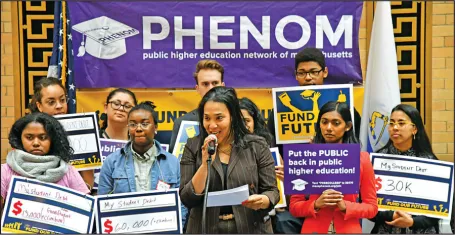
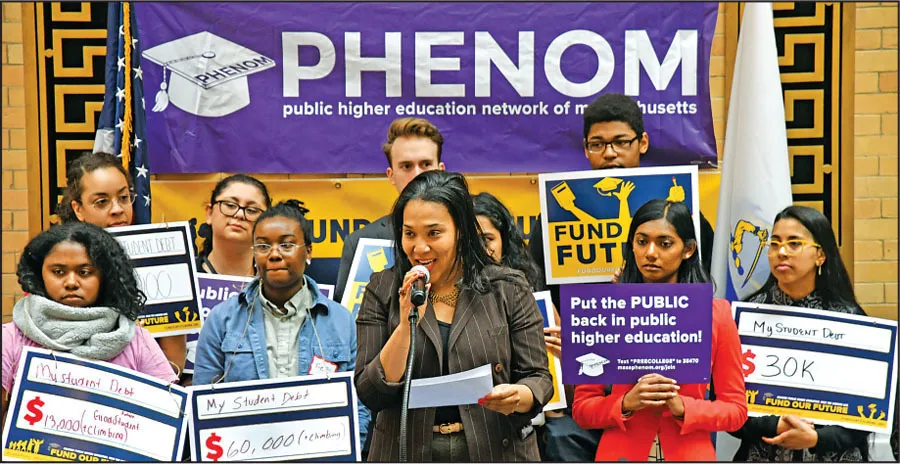
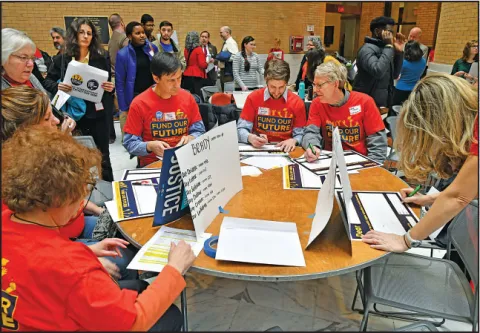
Two weeks before the coronavirus pandemic reached the point at which campuses were effectively shut down, hundreds of students, faculty members and staff from the Commonwealth’s colleges and universities were at the State House to advocate for the Cherish Act and a substantial increase in state investment in public higher education this year.
The need to confront the COVID-19 crisis — and the economic meltdown it has triggered — in some respects has had the consequence of reducing the impetus for the Cherish Act campaign in the Legislature. But in key ways, the pandemic has highlighted the dire problems resulting from the chronic underfunding of public higher education.
The issues that community colleges, state universities and the UMass system are currently confronting serve as poignant illustrations of longstanding troubles:
- The burden of student debt is growing heavier as job losses mount.
- Adjunct faculty without access to affordable health care have been made even more vulnerable.
- Faculty members have been left scrambling to find ways to deliver courses remotely.
- Staff members have clashed with administrators over access to personal protective equipment and the requirement that they report to work on campus, among other safety issues.
The economic impact on public colleges and universities has raised fears of layoffs as well as concerns that the crisis could be exploited to reduce faculty and staff, increase privatization, and move more courses permanently to online platforms.
A coalition of MTA higher education members from community colleges, state universities and the UMass system had begun working on new, more equitable funding solutions well before the coronavirus crisis hit, and that work will significantly ramp up as campuses work to rebound from the pandemic.
"We cannot allow this crisis to be used as an excuse to deepen the austerity measures put in place at our public colleges and universities," said MTA President Merrie Najimy.
The coalition will be central to the MTA’s work in advocating for greater federal resources for public higher education, starting with funding being made available through the CARES Act, the recently enacted federal stimulus package that stands to pump approximately $130 million into public colleges and universities in Massachusetts.
Najimy said the money needs to support students, staff and faculty directly.
UMass Amherst economics professor Michael Ash said that federal assistance will be necessary to supplement the state’s reinvestment in public education, but full funding of public colleges and universities by the state remains paramount.
UMass Amherst economics professor Michael Ash said that federal assistance will be necessary to supplement the state’s reinvestment in public education, but full funding of public colleges and universities by the state remains paramount.
"Investing in something that pays off more in the future is just a good idea," Ash said.
Ash is updating a 2012 research paper that he co-authored, "Economic Impact of Investments in Public Higher Education in Massachusetts: Short-Run Employment Stimulus, Long-Run Public Returns."
There is a short-term economic benefit to keeping college and university staff and faculty employed during a period of economic downturn, Ash explained — both to sustain educational quality on public campuses and to offset further financial harm caused by job losses.
Maintaining high-quality, affordable public colleges and universities will enhance workforce development and job creation, he said, which ultimately benefits the state with greater tax revenues and lower social safety net costs.
"States that did not invest in public higher ed during the last economic downturn had a much harder time coming back," Ash noted.
The crisis doesn’t change the campaign to win approval of the Cherish Act, which has three main legislative goals:
- Passage of a fiscal 2021 state budget that includes $120 million — the first installment set forth in the Cherish Act for additional public higher education funding.
- Passage of the full act, which would add $600 million to public higher education funding over the next five years, restoring the state to funding levels reached in fiscal 2001.
- Passage of the Debt Free Future Act.
Many MTA leaders from preK-12 locals attended this year’s Advocacy Day on March 2, asserting that since enactment of the Student Opportunity Act last year, it is time for state leaders to fully fund public higher education and not leave students stranded when they graduate from high school.
"This is not just a higher ed issue," said MTA Vice President Max Page. "This is a statewide issue."
During the Advocacy Day at the State House, students spoke about the difficulty of working multiple jobs while trying to carry a full course load. They said the problem is compounded as the portion of college budgets devoted to student services shrinks and vital supports disappear.
Cameron Costa, a student at Bristol Community College, told the audience that he had done everything he possibly could to be a standout high school student in New Bedford — and that his mother did everything she could to support his pursuit of a college degree. But he also shared the disheartening news that the portion of tuition and fees that colleges expected him to cover far exceeded what was realistic, given his family’s income.
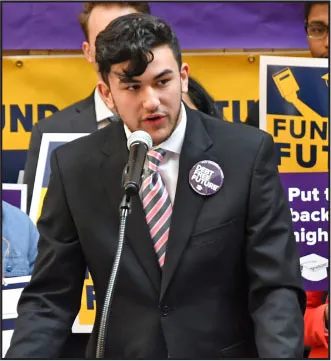
"I did my part as a student. My mom did her part as a parent," Costa said. "It’s time for the Legislature to do its part."
The task has become ever more urgent amid the current crisis.
For updates and more information, please visit massteacher.org and follow the MTA on Facebook, Twitter and Instagram.