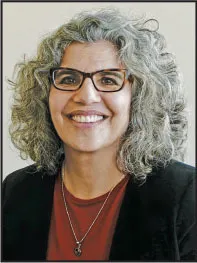
Over the last four years, MTA members have demonstrated time and time again that we can make a huge difference in the lives of our students as we help advance the common good in communities across the state. We see it when unionized educators come together, in their locals and across the MTA, to fight and win. And we see it every day.
As I write my last editorial for MTA Today, I am reflecting on the work that you have done to strengthen our union muscles, build our collective power, and achieve progress for educators, our public schools, and our public colleges and universities.
It truly has been an honor to serve as your president, and the journey with you has been joyful. This is your union — fully — and it is doing great things.
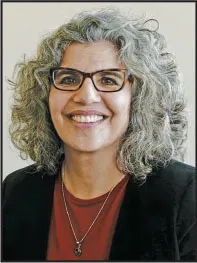
When I became president in 2018, we were on the path to building a rank-and-file-driven MTA — and I feel confident in saying that today, we are more fully there.
There is still more that we need to do, of course, and there always will be. We must shatter the three-decade-old "Education Reform" systems of forced compliance and austerity, and we need to drive our Commonwealth to take major steps toward racial, gender, social, economic, and education justice.
What model of education do we want? Do we believe our jobs exist solely so that we can disseminate prescribed information to students and test them on it? Or do we want to embrace their humanity and educate the whole child?
All of us recognize that as the COVID-19 pandemic continues to play a major role in our lives, our students — from prekindergarten through college — are struggling socially, emotionally, and academically.
The officials currently at the top of the state’s education bureaucracy want to go back to a "normal" that cannot exist anymore. And they refuse to acknowledge that for too many students and communities, that "normal" causes deep harm. Now more than ever, we must recognize the moral bankruptcy of that system.
The pandemic has shined a spotlight on the trauma that so many of our students face as a result of poverty, racism, and housing and food insecurity. As we emerge from it, we must move to a trauma-informed practice that makes all of our students feel valued because they’re visible in our schools, in our culture, and in our curriculum.
The MTA’s polling shows that the public agrees with our vision.
Funding is vital and must be sufficient and stable, as we have shown with our legislative victory on the Student Opportunity Act and our ongoing advocacy for the Cherish Act and the Fair Share Amendment. But it is not everything. As long as we continue to be driven by false goals, we will not be giving our students the education they need and deserve.
During my tenure, we have moved the MTA further toward being a fighting union — a union that is dedicated to forging and implementing policies that create equity and fairness. MTA-led campaigns have been realized through organizing by unionized educators and our labor allies, building political support along the way.
This has been true especially during the upheaval of the past two years.
Members have developed regional networks and have understood more deeply the value of banding together. Fighting for safe school and college buildings has converged with fighting for racial and social justice and for living wages for Education Support Professionals, adjunct faculty members, and others. We have stopped compartmentalizing.
You have made amazing strides through collective action. MTA educators now understand the immediacy of the need to create antiracist classrooms and structures at all levels. Our members are continuing the work required to make all public schools and colleges become places that lift up and affirm our students’ rich identities.
There is progress on many fronts. ESPs have developed a Bill of Rights and are organizing in dozens of cities and towns for respect and a living wage. Adjunct faculty members are moving toward similar forms of advocacy.
The new normal — while we continue to recognize that educators’ working conditions and students’ learning conditions are one and the same — is democratized bargaining: a coalition-based campaign for justice and the common good.
The pandemic has served to remind the public that unions protect not only workers but also the entire community. Our fight is not just for our own rights and benefits. It is to protect our entire communities and make Massachusetts a better place.
As a union, the pandemic has left us stronger and more focused.
And now more than ever, we must continue to act boldly.
So how do we get to a student-centered, highly professionalized and unionized system that serves the interests of all students from preK-16?
Full funding — and stable funding — remains vital.
The union-driven success of the Student Opportunity Act legislative campaign was a monumental victory to address the needs that had come to the surface since the enactment of the Education Reform Act of 1993.
And MTA members will rise to the challenge this year as we work to ensure that the Fair Share Amendment ballot measure becomes law, addressing a key gap in the stability of resources for both public education and transportation.
The third piece of the puzzle is guaranteeing permanent funding for public higher education and relieving the huge burden of debt that society is placing on college students. We need to win the Cherish Act or similar legislation to help provide both affordability and quality.
To tie all of this together, we must make it clear that we reject the false narrative that underpins a system that does so much harm in so many areas.
Having MCAS as a graduation requirement means keeping a racist, artificial barrier in place to "prove" that public schools are "failing" and denies opportunity to far too many students. Starving public colleges of resources makes the problem worse, especially for working families and students of color.
The MTA’s student-centered priorities are driven by a future for preK-16 education that is largely charted by your own expertise, professionalism, and personal commitment, furthered by the power of our union.
This year, we not only have the chance to win the Fair Share Amendment but also to bring an end to the anti-public-education sentiment that has held sway for too long with representatives of both parties when they’ve held the corner office on Beacon Hill.
Indeed, public education is properly the central issue in the gubernatorial race, intertwined as it is with both economic success and social justice. Our next governor must understand its importance and the urgency of righting what is wrong.
In the past few months, we have seen how right-wing lawmakers, urged on by their allies in a Congress that is in danger of a takeover by authoritarians, have been passing anti-LGBTQ+ laws, crushing restrictions on women’s rights, and legislation that attempts to undermine the teaching of American history.
Massachusetts must be a counterforce to the dire national backdrop.
It is now within our reach to elect a governor who will work hand in hand with the MTA to ensure that our students can get the education they need and deserve while providing educators with the resources and authority to provide it.
It is within our reach to ensure that public education is held in its rightful place: as the most precious resource in our democracy. And that justice in all of its many forms, brought forward by solidarity and collective action, is a consideration at every step along the way.
Be assured that I will fight hard for these goals during the remainder of my presidency and afterward, since they are in my heart and are the bedrock of my principles, values, and beliefs.
As I prepare to leave the MTA presidency, I feel privileged to have served you. I also do so with confidence. That is because I have faith in you, the educators of Massachusetts, to understand this vital truth: When we fight, we win.
Letters policy
MTA Today welcomes letters to the editor from MTA members. Letters should be no longer than 200 words. Each letter submitted for publication must address a topic covered in MTA Today, must be signed and must include the writer’s telephone number for confirmation purposes. Opinions must be clearly identified as belonging to the letter-writer. We reserve the right to edit for length, clarity and style. To submit a letter, mail it to MTA Today, 2 Heritage Drive, 8th floor, Quincy, MA 02171-2119, or email it to [email protected]. For additional information, please refer to the guidelines posted on www.massteacher.org.