Educators attending the recent MTA Ethnic Minority Affairs Committee Conference were challenged to think carefully about how they respond to their students, the way they choose texts and assignments, and whose stories they are amplifying — or ignoring.
The conference, held virtually over two weekends in early December, featured keynote speakers as well as breakout sessions that explored current issues in education. The event attracted more than 150 members.
Addressing the theme "Post-Pandemic: Rebuilding Inclusive Communities in Education," the conference featured addresses by Dina Gilio-Whitaker, an American Indian Studies scholar and environmental justice advocate, and Liz Kleinrock, an antibias, antiracist educator.
The opening night, Dec. 3, began with acknowledgments from MTA members that land across Massachusetts was originally the home of Native American tribes. Educators identified themselves, as well as which tribal nation lived in their area.
EMAC Chair Candace Shivers asked members to think back on the difficult year they’ve experienced but also consider encouraging moments.
"We’ve lived through some of the most challenging times most of us can remember," she said. "But I’ve had to, and I’m sure you’ve also had to, think about things and focus on things we can be grateful for."
In her address, Gilio-Whitaker, a descendant of the Colville Confederated tribes, emphasized the importance of language choices. She explained that words can have multiple contexts and that Native Americans should ideally be referred to in association with their specific tribal identifications, rather than as "Indigenous" or "BIPOC."
Assimilation into a larger whole is not the goal, she reminded participants, given the history of government-forced relocations and other tactics aimed at eliminating native people. Gilio-Whitaker is an author and a journalist, and her first book deconstructed stereotypes of American Indians.
Kleinrock, an elementary teacher and a consultant, said it is important for educators who identify as Black, brown and Asian to be centered in antibias and antiracist work in their school communities. But administrators should not assign work to educators based on their identity, said Kleinrock, who was born in Korea.
"If my school is thinking about new initiatives, or antiracism, or thinking about how to incorporate ethnic studies or culture into our classrooms, I want my experiences to be heard and I want them to be valued," she said. "But I don’t want the expectation that come May, for API heritage and history month I will take on all of that work because I identify as Asian."

Educators should also be thinking about the context of their lessons to make sure they are inclusive, she said. They should ask themselves: Are we broadening reading materials to include more representation of different perspectives and writers, but only including texts that have a traumatic framework? Kleinrock has re-examined her own classroom choices and broadened her selection of books, reflecting not just representation but also celebration of diverse cultures and backgrounds.
"Nobody, including myself, wants to be recognized for the worst things done to them," she said. "There needs to be a balance."
Among the titles now in use in her class: "Eyes that Kiss in the Corners," by Joanna Ho; "My Papi Has a Motorcycle," by Isabel Quintero; "We Are Water Protectors," by Carole Lindstrom; and "Harlem Renaissance Party," by Faith Ringgold.
Gilio-Whitaker, an adjunct professor at California State University San Marcos, talked to the audience about ethnic studies and how Critical Race Theory tends to consider a black-white dynamic. It can explain how racism is experienced by Native Americans but not how tribal nations have been systemically dispossessed of land. This is a process that continues today, she noted, citing as an example the effort by the Trump administration to remove the land rights of the Mashpee Wampanoags.
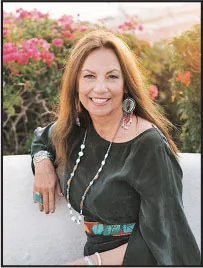
For Native Americans, the framework of discrimination is not necessarily around race, but concerns an understanding of settler colonialism. She recommended a recent documentary, "Exterminate All the Brutes," by the filmmaker Raoul Peck, which provides that context.
The use of racial descriptions or terms, such as BIPOC, is not preferred by many Native Americans or Alaska Natives, she said.
"It can inadvertently erase native people by subsuming us into this multicultural framework," she said. "It’s too close to assimilation."
In breakout activities during the conference — which was financially supported by MTA Benefits — members focused on practical ways they could broaden the representation in their curricula and classroom discussions and make schools more inclusive.
Sessions included "Intersectional Climate Justice Advocacy," "Demystifying Culturally Responsive Pedagogy" and "Achieving Racial Justice: Islamophobia and Muslim Students."
The latter program was led by Fatuma Mohamed, of the Council on American-Islamic Relations Massachusetts, and Amira Al-Subaey, at that time representing the Muslim Justice League. They shared survey data and anecdotes about Massachusetts students and parents who sought help for incidents of intimidation and bullying.
In one case, a 14-year-old student was harassed for wearing a hijab at school. She finally stopped wearing it. When she reported that a boy had told her she looked like a terrorist, she was mocked in the cafeteria by his friends.
"Building, maintaining, and repairing relationships is a lifelong endeavor," said MTA President Merrie Najimy. "It is what allows us to connect our humanity to others."
In a recent survey, 43 percent of students said they had witnessed someone being bullied for being Muslim. And 40 percent had experienced teachers or staff making offensive comments.
Al-Subaey said: "Those interpersonal instances of racism and Islamophobia are not in a vacuum. Those are deeply connected to the systems, structures and institutions that have racism and Islamophobia embedded in them."
Addressing members, MTA leaders said that rebuilding inclusive school communities is a priority. Following activism from the union, the state has agreed to provide nearly $400 million in one-time federal funds for public education. The funding includes $10 million for diversifying the public education workforce, MTA Vice President Max Page noted.
MTA President Merrie Najimy said the work of building inclusive communities is ongoing. "Building, maintaining, and repairing relationships is a lifelong endeavor," she said. "It is what allows us to connect our humanity to others."
The MTA aspires to be a union of antiracist educators and antiracist unionists, Najimy continued, adding: "We must understand the interconnectedness of structural and individual racism and the multiple forms of racism that impact different racial and ethnic groups, including Islamophobia."