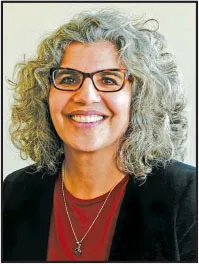
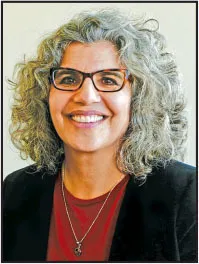
Throughout the summer and fall, MTA Vice President Max Page and I have been having deep conversations with members and others about the Fair Share Amendment as we work to ensure that the ballot measure passes next year.
In our discussions with members across the state, we reflect on the fact that public education has always been vital to our students, their families, and our communities. But as we continue to cope with the COVID-19 pandemic, the importance of our schools and colleges becomes ever more clear.
So what do our public schools and colleges mean to your community and to our Commonwealth? Time and time again, we hear from MTA members and families that public education is the backbone of our society.
Our preK-12 schools are the center of our local communities. They’re the places where we teach students how to become their fullest selves, learn about the world beyond themselves, and cherish and protect our democracy. School is the only place where some students feel safe. And for other children, school meals are the only food they can rely on.
Our public colleges and universities offer students the next crucial step toward satisfying and successful lives. And they are hurting, as is apparent from enrollment trends — particularly the loss of students of color.
MTA educators, when asked what resources they want to spend the money on if we win passage of the FSA, are envisioning what the future could hold. They see the possibility of more staff across the board to support our students. More mental health counselors. More nurses. More staff to liaise with families who have English language barriers and economic needs. More full-time faculty at our colleges and universities. More funding for high-quality programs. A reduction in school class sizes and college students’ debt. And the guarantee of a living wage for Education Support Professionals, adjunct faculty members, and other crucial public education employees.
Our entire curriculum has to change, as well, to truly reflect the diverse identities of our students. We need antiracist, anti-bias education. We must transform our pedagogy, our curricula, our instructional practices, our culture and climate, and how we assess students — which means taking down the MCAS and adopting a more holistic framework and a democratized system. Our curricula must be centered around the rich backgrounds and genuine needs of our students, and it must value and affirm who they are.
We must reject the call from the Department of Elementary and Secondary Education to "accelerate" and "catch kids up." Instead, we have to spend the precious time we have with our students helping them rebuild a sense of wholeness.
Already, we are seeing cries from our communities — student revolts against the status quo and demands to transform our schools — in places such as Quincy, Danvers and Braintree.
Another indication of the depth of social, racial and economic injustice is present in our community colleges, where enrollment has declined sharply for first-year Black and Latinx students — falling by nearly 30 percent during the pandemic.
This is a challenging moment, but also a promising one.
We know that communities of color had inequitable access to public higher education due to disinvestment long before COVID-19 hit and that the pandemic has only exacerbated the inequity. The state’s unconscionable solution is to fail to fully support our public colleges and universities.
What we really must do is to invest heavily in BIPOC and low-income communities to ensure they have what they truly need in preK-12 schools — and have a strong bridge to help students go on to college.
Overall, we are at a crossroads. The COVID-19 pandemic has brought social, racial, economic and gender justice to the forefront. This moment calls for us to grab the pendulum and swing it out of the accountability movement and toward education justice.
One critical opportunity is to win the FSA campaign, which is rooted in the broader concepts of fairness and equity. When the Commonwealth invests in the public good, we all share in prosperity.
The FSA provides a chance to restart the meaningful and positive relationships that educators have with our students, their families, our communities, and other stakeholders. The year ahead is filled with the opportunity to re-engage with everyone we talk to about a renewed vision for public education and how money gets spent to support our public schools and campuses, as well as to shore up our transportation systems.
And contrary to the divisive and raucous views that sometimes seem to dominate the debate, there is a deep reservoir of support for public educators like you, as a recent Axios-Ipsos poll shows. From our own polling, it is clear that most people understand that this is a moment for clarity and forward momentum: Parents like our vision for the kind of curriculum our schools need. Moreover, two-thirds of Massachusetts residents understand that our jobs have become even harder during the pandemic, and their opinions of educators are very favorable.
As we fight for the FSA in the months ahead, we also need to ensure that the Cherish Act or a similar bill will be enacted to increase spending for our public colleges and universities. And we need to ensure that funding from the American Rescue Plan Act will supplement the education resources guaranteed by the Student Opportunity Act.
This is a challenging moment, but also a promising one.
You and your co-workers have made it clear that a fully resourced public education system, from preK to 16, is central to our communities — and that this is the moment everything must come together.
A lot is at stake, and our battles will be significant. But they are winnable. We must seize this opportunity to fix what’s broken.
Letters policy
MTA Today welcomes letters to the editor from MTA members. Letters should be no longer than 200 words. Each letter submitted for publication must address a topic covered in MTA Today, must be signed and must include the writer’s telephone number for confirmation purposes. Opinions must be clearly identified as belonging to the letter-writer. We reserve the right to edit for length, clarity and style. To submit a letter, mail it to MTA Today, 2 Heritage Drive, 8th floor, Quincy, MA 02171-2119, or email it to [email protected]. For additional information, please refer to the guidelines posted on www.massteacher.org.