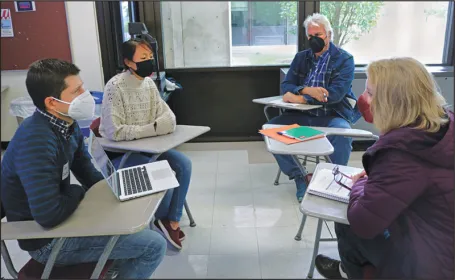
Recent workshops dedicated to addressing climate change in both contract bargaining and classes throughout the preK-12 curriculum emphasized that climate action is not something that should — or really even can — exist in isolation.
Michael Kozuch, chair of the MTA’s Climate Action Network, teaches high school in Newton. And he told educators gathered for workshops on Oct. 1 that while he enjoys offering students a course on environmental sustainability, climate information needs to be woven into math classes, English classes, art classes — just about everything — not only science classes.
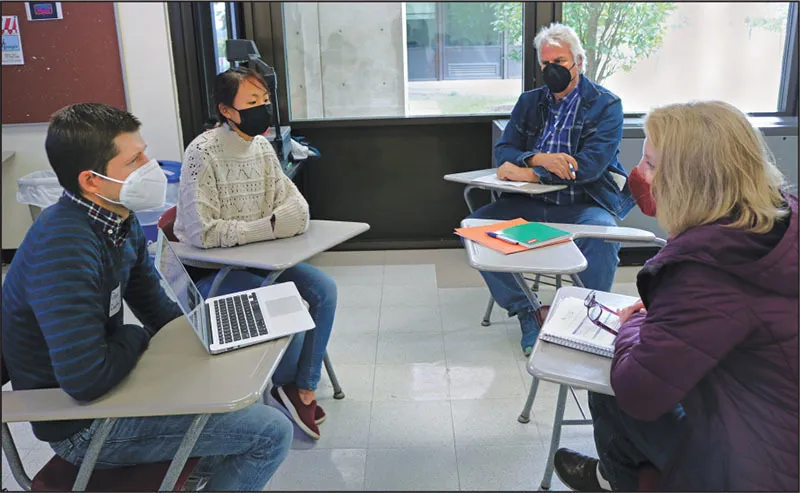
"We need units for all regular classes, not just sustainability classes like the one I teach," Kozuch said. "We need to be thinking about climate change in an interdisciplinary way."
Curriculum development was one part of MTA CAN’s inaugural Climate Conference, which was held at UMass Amherst. Union educators also focused on contract bargaining and listened to speakers from the Somerville Educators Union, which won contract language that incentivized educators’ use of public transportation, established a climate change curriculum committee, and formalized a process to address the movement of local schools toward a carbon-neutral future.
SEU member Alex Hershey explained how his local engaged youth groups dedicated to climate action, as well as community members, in its push to win contract language on an issue that a school committee could claim was not subject to bargaining.
"The district was ignoring our proposals," Hershey said. "But our advocacy work happened outside of the bargaining room. The Sunrise youth group circulated a petition with our proposals and was advocating for our contract. Mothers Out Front and other groups started talking to the School Committee. With some push from the outside, it made it hard for the School Committee to ignore us."
MTA CAN member Ferd Wulkan, who has been working with unions at UMass Amherst, stressed the importance of such community coalition building as well as making sure that members — particularly in large locals, such as those found in public higher bargaining for proposals that address climate change.
"We need to be connecting these bigger issues to day-to-day life and to traditional bread-and-butter contract issues," he said.
The Climate Action Network, formed by educators about four years ago, received a grant from the MTA to help fund the Oct. 1 workshops, which drew union members from throughout the state and across grade levels and disciplines.
The network has advanced from its original mission of supporting student activism around climate action to addressing curriculum development, bargaining opportunities and community coalition building.
Participants in the inaugural conference said the workshops gave them good ideas about how to engage their students and talk to colleagues about finding ways into climate action work. "This has been really energizing and gives me good ideas about places to start," said Heather Smith, an Arlington educator.
MTA President Max Page gave the keynote address. Participants also listened to speakers from the Massachusetts Audubon Society and SubjectToClimate, nonprofit organizations that provide curriculum assistance for educators.
Page reminded the educators attending the conference that small changes in policy can help alter the trajectory that is sending us toward climate disaster.
"What is the union’s role in that? Well, who will tell the stories about what is wrong? Who will point to the history of using water power and its potential? Who will make better turbines? How do these stories get told? That’s us," Page said. "From those of you teaching the youngest students to the researchers at UMass, the union plays a major role in creating a better future and letting people know that a better world is possible."