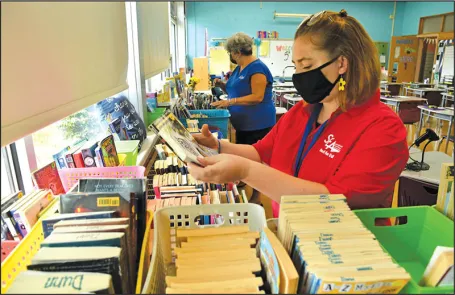
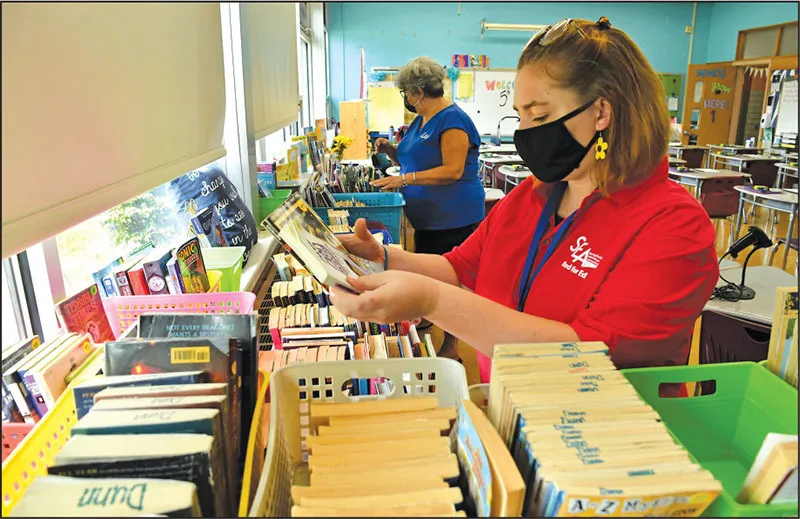
As schools across Massachusetts reopened for in-person learning, newly elected Springfield Education Association President Tracy Little-Sasanecki noted that her fellow educators were dedicating themselves to bringing empathy to their classrooms.
"Students know we are creating and advocating for a safe place for them because some don’t always have a safe place in their own homes," Little-Sasanecki told MTA Today. "They need to come to a building where they are going to be nurtured and fed with food and knowledge. And they know there are people behind these doors with open arms — as open as we can get them to be — in our classrooms and also in our hearts."
SEA educators have organized throughout the COVID-19 pandemic to ensure a safe return to in-person learning. Over the last 18 months, Little-Sasanecki said, the union has held regular meetings and experienced a groundswell of active participation among members.
"We made sure that none of us were returning back into the buildings until it was safe for all of us," she said.
MTA members made great strides in creating engaging curriculum during the pandemic, finding new and creative ways to connect virtually with students. As unionists, educators also have led the charge in ensuring safer and healthier learning and working conditions in school buildings, winning key protections such as access to face coverings for students and staff, adequate room ventilation, surveillance testing for the coronavirus, and other health and safety accommodations.
Getting schools to reopen safely for full in-person learning has been the MTA’s top priority for months, noted MTA President Merrie Najimy. One focus has been the adoption of guidelines set by the federal Centers for Disease Control and Prevention.
"Educators, through their local unions supported by the MTA, have worked tirelessly to create safer and healthier learning and working conditions for returning to schools," Najimy said. "It is because of our members’ advocacy that we have won key victories such as the implementation of CDC guidelines in schools.
"Our efforts have helped ensure that students and educators can resume and continue in-person learning to the safest degree possible — and we plan to keep up the pressure as the year unfolds," she added.
MTA Vice President Max Page remarked that educators helped win an unprecedented amount of federal funding for school districts to address the inequities in public education that have been exposed by the pandemic.
"Now is the time for our unions, parents and community leaders to be organizing for our students’ needs," said Page. "We have the opportunity to take bold action around conditions in our school buildings — and especially the amount of staffing we know that it takes to provide a high-quality, comprehensive education."
While educators are joyful about being reunited with their students and colleagues, they are also cautious, and they are worried about what may develop as a result of the continued presence of the virus.

"I think every educator who is coming back is excited. It’s a new year and a new beginning. It’s an opportunity to do what we do best and to continue to shine in our passion," Little-Sasanecki said, adding: "There is, of course, some apprehension because we are still in the middle of a pandemic, and teachers want to make sure that administrators are following all health and safety measures and protocols."
Even so, the focus remains on the students.
"I hope students can feel the warmth and passion that many of us have in our profession once they see our educators," Little-Sasanecki said. "That is a joy and will be everlasting."
Educators in other communities are likewise happy to be back with their students. But many remain critical of the role played in the reopening process by the state and the administration of Governor Charlie Baker.
Chicopee Education Association President Laura Demakis said that although educators have been looking forward to full in-person learning, the surge of the delta variant of the coronavirus has created complications. Demakis stressed that the Department of Elementary and Secondary Education should be working more closely with educators’ unions and other stakeholders to offer more comprehensive guidance — and that the state must be willing to adjust as the situation changes.
Demakis noted that while union members and city health experts are supportive of the recent mask mandate put in place by the state, there are many unanswered questions concerning how to sort out complex details. She also cited the question of determining what constitutes the "80 percent vaccination rate" and how it will take effect in buildings and districts. "We need real leadership from the state," Demakis said.
And Demakis said that in-person learning will need to be very closely monitored, with regular meetings that involve educators, the school district, and community members to analyze local health data.
In Springfield, educators have organized and bargained for better learning and working conditions since the onset of the pandemic. They include layered health and safety strategies that will protect students and the community at large.
"It’s our agenda — it’s not theirs," Springfield Education Association President Tracy Little-Sasanecki noted in a recent interview.
Little-Sasanecki noted that most of the district’s school buildings are old, and many do not have air conditioning, let alone upgraded ventilation systems that can properly circulate air — a proven mitigation strategy that health experts say can minimize indoor spread of the coronavirus.
SEA members fought for those improvements. Little-Sasanecki said a company that specializes in HVAC systems assessed every Springfield public school building and presented a report to the superintendent, the school district and the School Committee.
Some of the district’s oldest buildings have been closed. And administrators have assured educators that all Springfield buildings now meet standards because of completed improvements, said Brenda Dunn, a fifth-grade teacher who serves as the SEA’s vice president.
The union also partnered with a company to purchase face shields for every educator. Little-Sasanecki said teachers will make sure that handsanitizer stations are adequately filled and that students are keeping a safe physical distance when possible. Educators will also ensure students are wearing masks indoors — though experience has shown that is unlikely to be a problem.
"I didn’t have a single child that gave me a hard time about it," Dunn noted. "The kids understand it’s about protecting themselves and that we’re protecting each other. They are so responsible."
Both educators said the school district seems to be working with the union to rectify COVID-19 concerns brought forth by SEA members. At the same time, union members remain actively engaged in the process to ensure safety.
"It’s because all of our educators are in the building working together; if one person has experienced an issue, then somebody else has experienced it, and then we build capacity and voices," said Little-Sasanecki. "When we bring concerns to the administration, educators know that they will have people behind them who are supporting their concerns with one voice. There are just so many things that we wouldn’t see in our union office unless members bring it to our attention."
During the pandemic, virtual meeting platforms such as Zoom have expanded access for members who sometimes were not able to attend in-person meetings in the past.
"We’ve had over 100 people Zoom," Little-Sasanecki said. "We listened, took notes, and wrote down every question asked."
Little-Sasanecki said the union has responded rapidly, presenting the district with more than 600 questions that reflected issues raised by educators. SEA members, along with other allies, meet with the superintendent weekly.
"It’s our agenda — it’s not theirs," Little-Sasanecki said. "The SEA and the Springfield Federation of Paraprofessionals get together and talk about what concerns our members have, and we bring them to the table."