
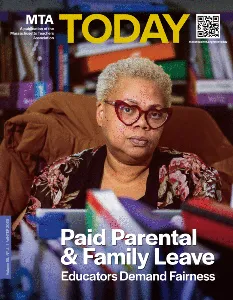
This story ran in the winter 2025 edition of MTA Today.
Nancy Tynan Cederholm was only a few years into her career in public education when she heard about the Windfall Elimination Provision and Government Pension Offset. Back then, in the late 1990s, she wasn’t thinking about retirement and didn’t dwell on it.
Read MTA Today
But now, at 70, she’s ready. And thanks to the recent repeal of those laws, she can retire next year without losing any of the Social Security benefits she earned while working for about 25 years in a variety of private-sector jobs. She’s still working in Wareham as a clerical employee and Education Support Professional and plans to retire next year when her husband reaches his retirement age.
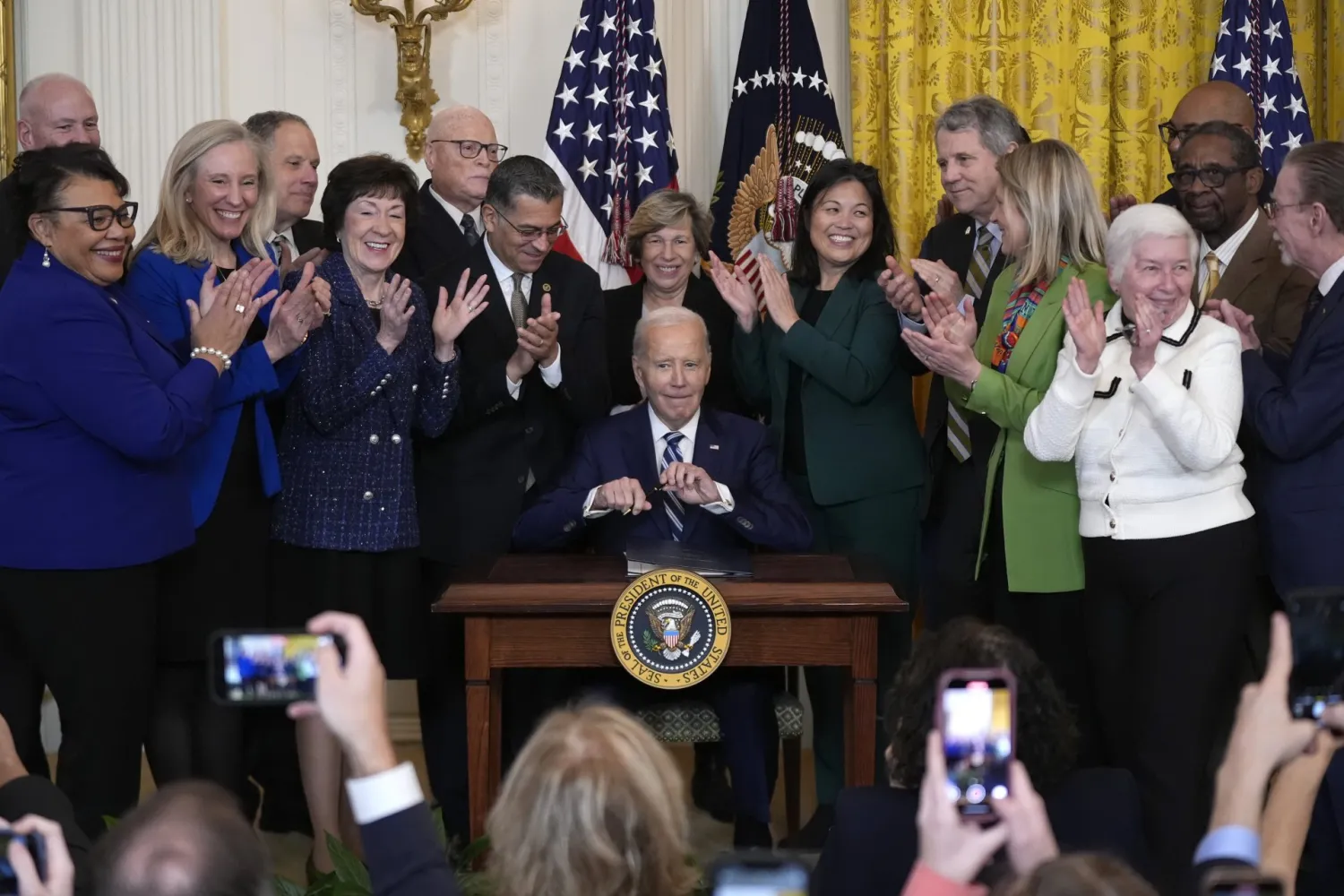
Like many MTA members, Tynan Cederholm tuned in to C-SPAN and watched President Biden on Jan. 5 as he signed the Social Security Fairness Act into law. Suddenly, after years of worrying about their finances, or delaying retirement to save more money to compensate for what they expected to lose, educators who had paid into Social Security for years feel a weight lifted.
Suddenly, after years of worrying about their finances, or delaying retirement to save more money to compensate for what they expected to lose, educators who had paid into Social Security for years feel a weight lifted.
“It’s not going to affect me,” Tynan Cederholm said. “When I retire, I won’t have the two-thirds taken off.” She estimates that loss would have reduced her gross Social Security by about $9,000 annually.
With a win 40 years in the making, a new federal law secures full retirement benefits for educators
An injustice robbing public employees of hard-earned retirement benefits for the past 40 years has been corrected. On Jan. 5, 2025, President Joe Biden signed into law a full repeal of the federal GPO-WEP laws. This victory came in part through the efforts of MTA and NEA members, who called and visited their elected representatives to encourage them to vote for a repeal that will enable them to retire with the Social Security they rightfully earned.
Following an early-morning approval by the U.S. Senate on Dec. 21, the repeal legislation was delivered to Biden, who signed it at a White House ceremony. The U.S. House had earlier approved the repeal. The Social Security Administration now will determine how to implement the measure. The agency has created a site on its home page for people to obtain updates.
“Over 2.5 million Americans will receive a lump sum payment of thousands of dollars to make up for the shortfall in the benefits they should have gotten in 2024, and they will begin receiving these payments this year,” Biden said. “This victory is the culmination of a forty-year fight to provide security for workers who dedicated their lives to their communities. I am proud to have played a small part in this fight.”
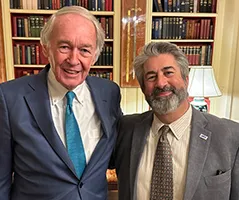
MTA President Max President had the honor of being at the White House for the bill signing.
Page, pictured with Senator Ed Markey, a longtime supporter of the repeal of the GPO and WEP laws, said: "The 40-year-long steal of well-earned retirement benefits from public servants across the country, including tens of thousands of MTA members, has been repealed! Organizing, advocacy, and persistence by unions across the nation and throughout the NEA made this possible. What a powerful way to start off the new year."
Updates from the Social Security Administration NEA FAQ on Social Security Fairness Act
About GPO and WEP
On Jan. 5, 2025, President Joe Biden signed into law the bipartisan Social Security Fairness Act, capping off a 40-year effort to repeal the punitive and discriminatory Government Pension Offset and Windfall Elimination Provision laws.
Additional Resources
- Updates from the Social Security Administration
- GPO/WEP Explained, Mass Retirees
- NEA FAQ: Social Security Fairness Act, NEA
- LANDMARK Victory! GPO and WEP repealed, NEA
For far too long, many elected leaders were not well-informed about how these unfair provisions hurt millions of public employees across the nation. Fortunately, educators stepped in with the facts:
- More than 2.8 million public sector employees in 26 states were impacted by GPO and WEP. Educators were affected in 15 of those states (see map), because they pay into their state pension system, but not into Social Security.
- WEP assumed that none of these public employees earn Social Security benefits – which failed to take into account that many educators hold second jobs and summer gigs that require them to pay Social Security taxes. The provision was often devastating to career-changers, who did not receive the full benefit of the years they did pay into Social Security.
- GPO reduced spousal or survivor benefits. More than 70 percent of those affected by GPO lost their entire spousal or survivor benefit.
Some widowed educators received that survivor’s benefit while they were still working. But the minute they retired and started receiving pension payments, they no longer received the benefit that their loved one earned.