Educators who identify as LGBTQ+ and their professional allies are coming together this year in greater numbers to reflect on their strengths and challenges, and pinpoint how to best help students in their schools and college campuses.
For the first time, the MTA organized an LGBTQ+ Summit, held in March at Worcester Technical High School, an event that drew more than 150 people and resulted in a waiting list. The summit is in preparation for a full conference, for which the date and location are being finalized.
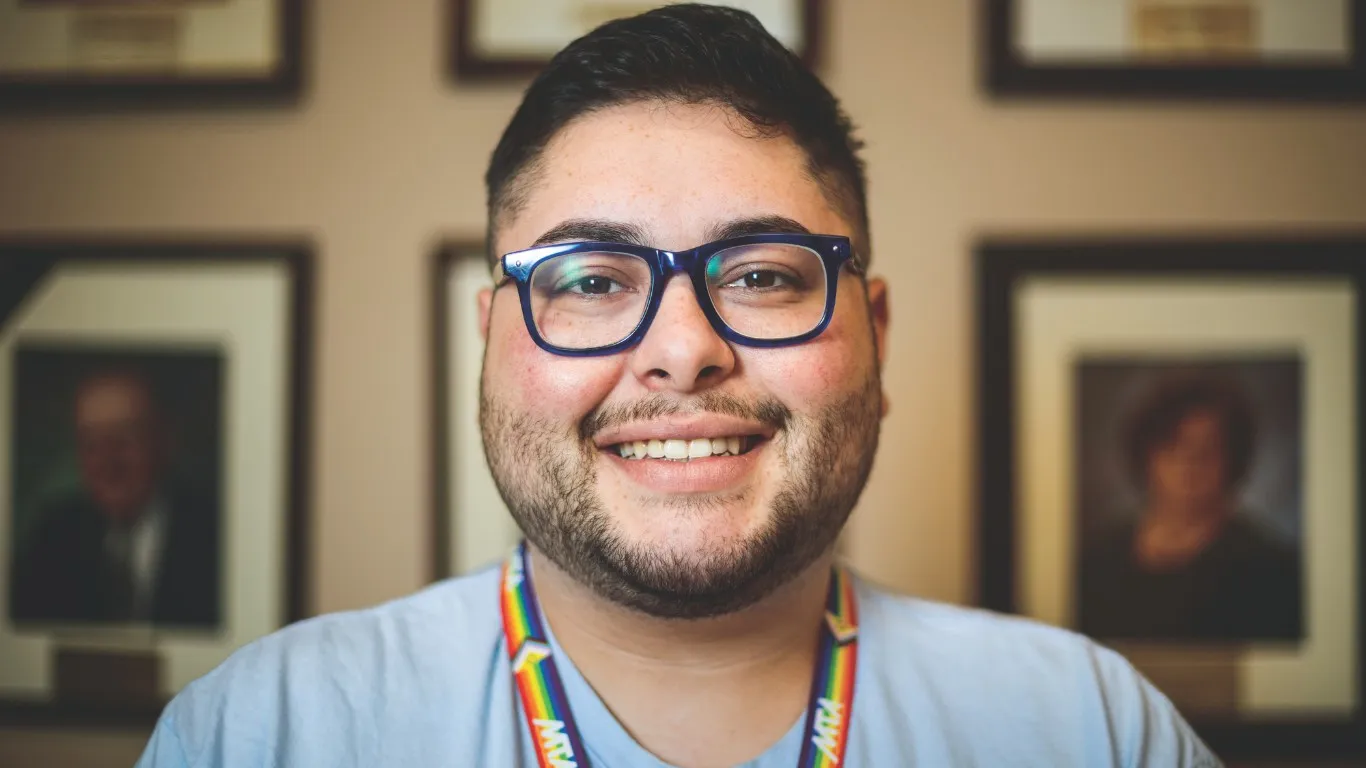
Educators who attended the summit said they felt supported and seen by their peers. Alex Rivera-Ortiz, a member of the Educational Association of Worcester who is a member of the MTA’s LGBTQ+ Committee, was happy with the turnout: “Knowing and seeing that there were a lot of queer educators and allies who are willing to do the work and who came – you can tell it’s needed.”
Educators gathered in small classroom groups to discuss ways to support transgender, non-binary and gender non-conforming students, including through legal protections, and how to defend educators in their freedom to teach.
Rivera-Ortiz, who led a session on creating and supporting youth clubs for students, including the Gender and Sexuality Alliance Club, said the afterschool programs offer students a way to shed any “masks” that they may feel they have to wear through the day. “A lot of the times, the kids just come to hang out and feel like themselves,” said Rivera-Ortiz.
Educators have the right to introduce topics in their classes that incorporate diverse themes. Rivera-Ortiz is making sure students in the GSA club he oversees, for example, get the perspective of LGBTQ+ history, as they would any part of American history.
In preparation for the upcoming LGBTQ+ Conference, the summit helped to provide feedback from participants on what sessions they enjoyed the most. The National Education Association participated, as well, and several sessions were led by its instructors.
The conference was created by a New Business Item approved by the MTA Annual Meeting delegates in 2025. The nine-member LGBTQ+ Committee, which represent locals throughout the state, was pleased to learn that many of the summit attendees were new-career educators, as well as people who had never attended an MTA conference previously, said Roxanne Campbell, a committee co-chair, who teaches in Revere.
“The people who attended were really great and they had a lot of questions: How do they support each other; how do they support their children,” she said.
For educators who identify as LGBTQ+, and their allies, the teaching environment in Massachusetts is a mixed bag. Some school districts are supportive; others are not. Colleagues themselves can be supportive, or not. Many educators are experiencing microaggressions, the comments or looks that can hurt someone or make them feel unseen. Rivera-Ortiz said one educator recently was told they couldn’t put a photo of their family on their desk.
One way that educators can advocate for their rights is to strengthen their local contracts with specific language, for example, that protects all members’ rights to gender-affirming care, which can include breast reconstruction for cancer survivors, said Kirsten Frazier, a presenter who teaches multilingual learners in elementary grades in Worcester.
The NEA last year updated its guidebook for bargaining to protect LGBTQ+ rights, which includes sample contract language.
MTA President Max Page said the union is committed to protecting educator and student rights to teach and learn freely. “Every student deserves a high-quality public education. We do not ask in our schools what your immigration status is, what your gender is, what your sexual preference is. This is one of the most fundamental and most powerful commitments we make as public educators.”
School committees are trying, in some areas, to limit what books can be found in libraries, Page said. Other communities are trying to limit participation of trans students in athletics. “We have stood firmly against those, and we will always do that, partly because of the insistence of our members,” Page said.
For students, one of the most pressing education-based challenges in schools is bullying, said Frazier. By late in elementary school and middle school, it’s more of a problem. “Bullying is a perennial issue,” they said. “It’s not simply related to one’s gender identity. But when that is something that is not clearly defined, or it’s ambiguous, that certainly opens them up to some bullying that wouldn’t normally be there necessarily.”
Educators need to be mindful of this and intervene.
They also can be supportive through simple steps, like making sure classrooms are free of gender-specific references. Schools can stop using different colors for genders in graduation robes, as Worcester did recently. And a simple pin can send a message.
Rivera-Ortiz wears an MTA “Protect Trans Kids” button on his lanyard. Research has shown, he said, that the support and affirmation of even one adult in the life of an LGBTQ+ youth can reduce suicide risk by 40 percent. “Just having this pin saves lives,” Rivera-Ortiz said.
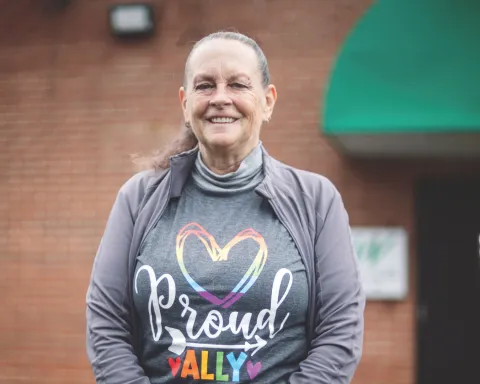
Tina Mansfield, an Education Support Professional who drives a school bus in Worcester, makes sure her kids know she’s an ally.
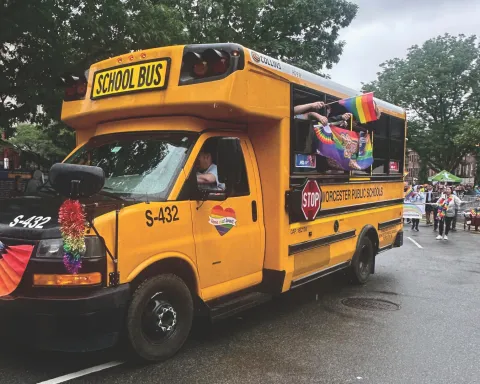
She attended the summit and was interested in learning about the legal protections for students and professionals. Mansfield volunteered to drive the MTA Pride Bus for the June 6 Boston Pride for the People Parade and Festival.
One of Mansfield’s possessions is a rainbow magnet that she takes with her on her bus. “For my students, my colleagues, to let them know I’m there,” Mansfield said. “I want them to know that I’m safe, that I’m here and that I support everything that they do.”
MTA Vice President Deb McCarthy addressed summit attendees with an acknowledgement of trans rights. She cited the work of the Transgender Law Center and its mission of advocating for the self-determination of all people.
“Cornel West said, ‘Justice is what love looks like in public’,” McCarthy said. “It seems to me when we lead with a lens toward trans justice, we lead with a blueprint that is a liberation agenda for all.”
For more information on MTA resources for LGBTQ+ rights, please visit massteacher.org/lgbtqplusresources.