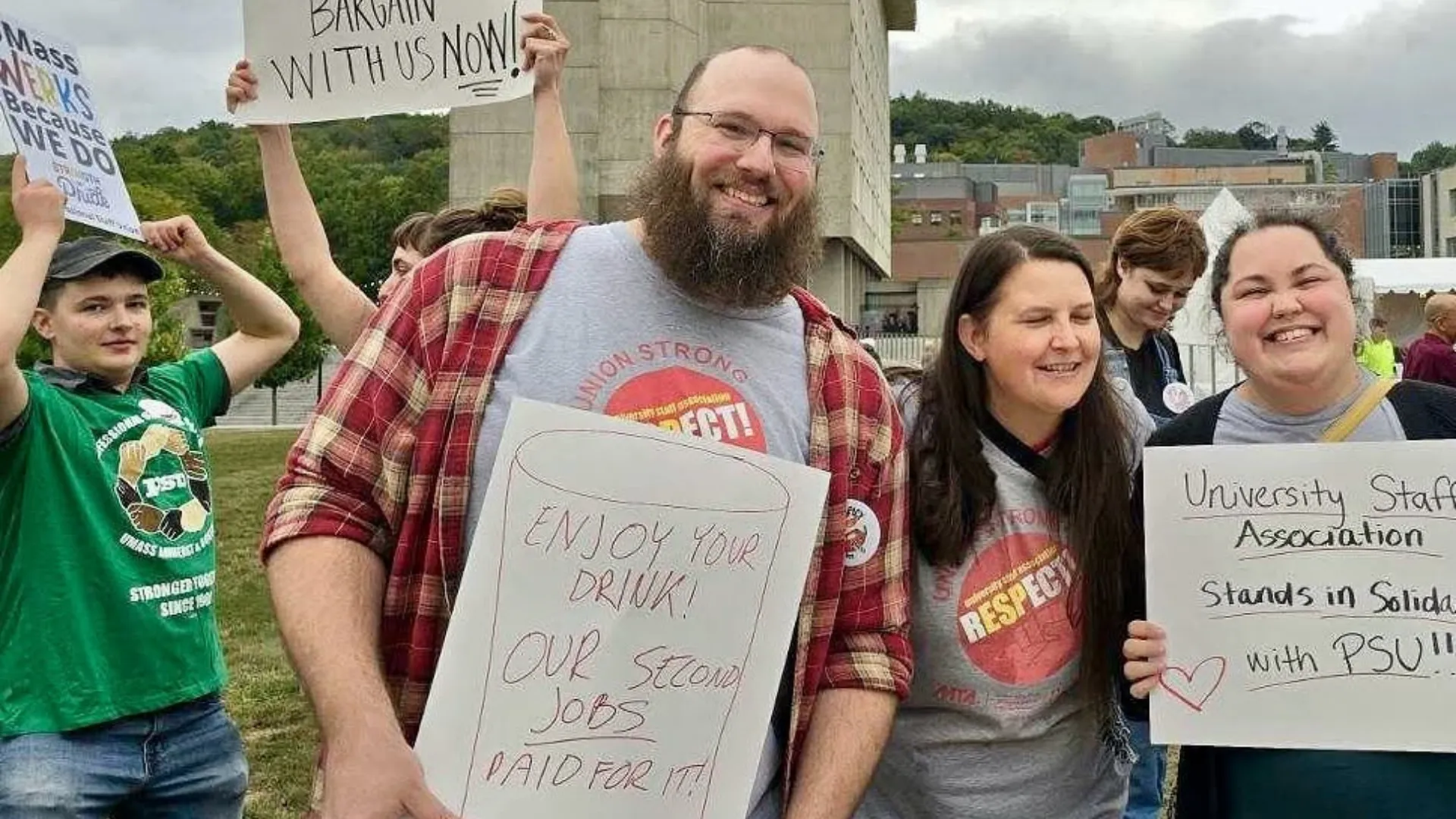
With faculty and staff at community colleges, state universities and UMass citing the need for second and third jobs, struggles to pay bills, and reliance on food banks all because of low wages, multiple unions representing tens of thousands of workers throughout Massachusetts’s public higher education system are participating in a statewide campaign aimed at the Legislature and Gov. Maura Healey to significantly improve funding available for labor contracts.
The Fair Wages Now! campaign has been endorsed by unions representing workers on every public higher education campus that has affiliates of the Massachusetts Teachers Association. MTA members working at community colleges, state universities and UMass developed the campaign over the summer in response to studies showing that public higher education employees in Massachusetts earn up to 30 percent less in comparison to colleagues working in comparable states. Lagging wages undermine the quality of Massachusetts’s public higher education institutions and have made it difficult for public colleges and universities to fill job vacancies and retain employees. Wide wage gaps also exist among the state’s higher education sectors.
The campaign’s goal is for unions to settle contracts with the state that boost wages by 30 percent over the course of three years. The billions of dollars raised by the Fair Share Amendment make it possible to pay public higher education employees the wages they deserve.
“Using Fair Share funds to make public higher education affordable is a right and obvious choice for the Commonwealth, but to maintain the quality of public colleges and universities, we are long overdue for an investment in the people who make public higher education possible,” said MTA President Matt Bach. “Members are unified in challenging the tired narrative that Massachusetts cannot afford to pay its workers and will be demanding state budgets that bring wages for public higher ed workers up to where they need to be. Workers deserve fair pay and students deserve staffing and programs that best support their success.”
The Fair Wages Now! campaign will have activities on campuses around the state throughout the fall leading to a rally outside the State House in Boston on Nov. 20.
Staff and faculty shared why Fair Wages Now! is vital to the public higher education system:
“Low wages impose significant barriers and difficulties in attracting and retaining quality faculty and staff across public higher education. The governor must deeply invest in these workers so that Massachusetts remains a national leader in public higher education. There is something fundamentally wrong when you have staff and faculty who must rely on public assistance simply to make ends meet because their low wages do not cover the cost of living in the state they serve!” – Alexa MacPherson, system analyst, UMass Boston
"Our members keep Massachusetts’ state universities running, supporting our students from their first visit all the way through graduation. Every year, we are asked to do more with less, and we deliver. Fair Wages Now! is about calling on the Commonwealth to recognize the value of that work with wages that reflect the reality of living in Massachusetts. A food pantry is not a substitute for fair wages, and the people who serve this state every day should be able to afford to live here.” – Rosa Taormina, advisor, Salem State University
“The Fair Wages Now! campaign is critical to my coworkers. We have always been poorly compensated, but the last few years have brought so much economic hardship and uncertainty. Many of us have to work second jobs or rely on credit cards to pay bills and buy groceries. Some of the folks in my local even reported experiencing food insecurity as grocery and gas prices soar.” – Sheila Gilmour, registrar’s office, UMass Amherst
“My path to becoming an educator wasn’t traditional. I dropped out of high school, earned my GED, came to Springfield Technical Community College and began remedial classes, and eventually returned to STCC as a full-time faculty member while continuing my education through a master’s degree and now toward a doctorate. I still live in the community just minutes from the college where I was once a student, yet in addition to working full time at STCC, I adjunct, teach workforce classes, and work clinically during summers and breaks. I believe a full-time educator should be able to afford to live in the community they serve without needing multiple additional jobs. I’m advocating for fair wages, especially for our adjunct faculty, because I want our students to see us standing up for the value of our work, and I want the educators who come after us to inherit something better.” – Amanda Berthiaume, faculty, Springfield Technical Community College
“What would a 30 percent raise mean to me? A lot. It would mean having a savings account that I don't touch and isn’t constantly being drained, a few less bills in the stack that’s been haunting me for months, and more meaningful time with the people I love. Most importantly, it would mean I could stop running for a moment and finally catch my breath. Even if it’s only for a moment, that breathing room would give me the strength to keep fighting for what comes next: a thriving wage for all.” – Colin Sullivan, grant coordinator, Bridgewater State University.
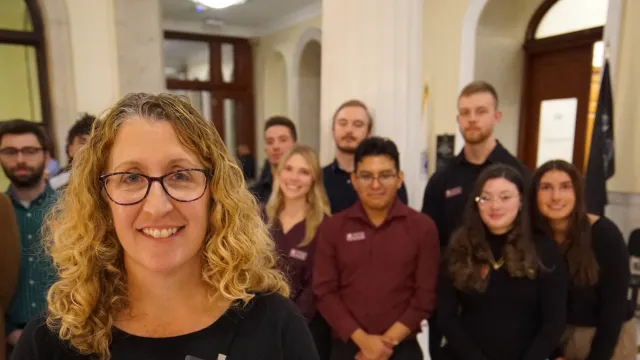
Fair Wages Now Campaign
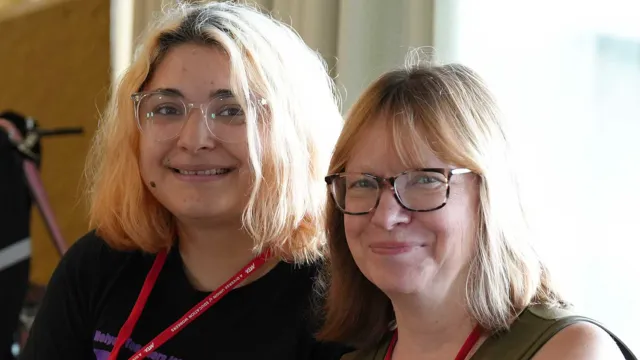
Rally at the State House on Nov. 20
Media Contact
- Scott McLennan
- [email protected]