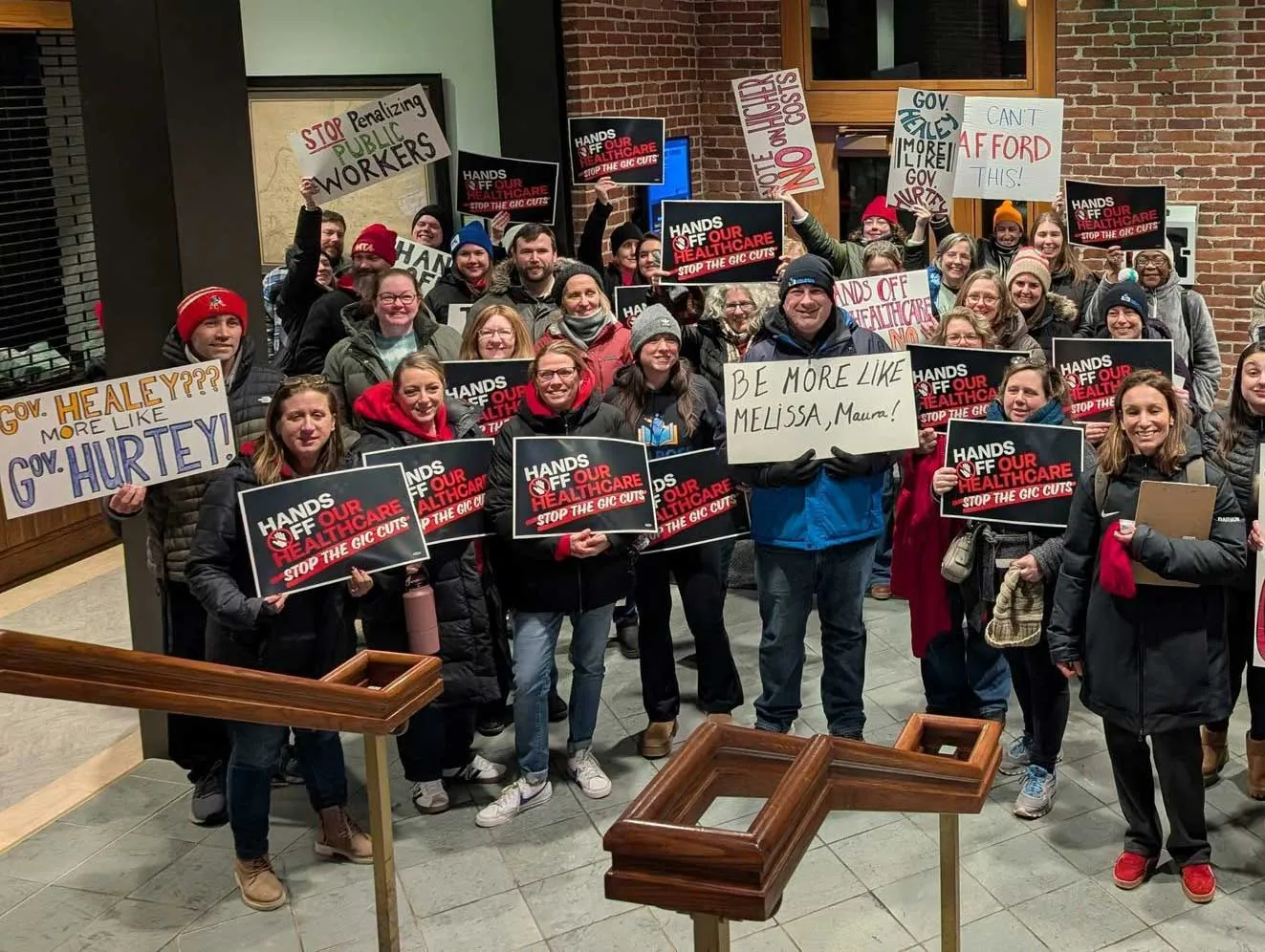
Gov. Maura Healey is proposing to slash more than $100 million from the Group Insurance Commission, which provides health care plans for nearly 500,000 public employees, including more than 30,000 MTA members working in public higher education and those in preK-12 districts that participate in commission plans.
In response, MTA members quickly began mobilizing in January, ahead of a planned Feb. 12 vote by the GIC to change insurance plan designs that would shift costs to workers. Some of the significant changes brought up for consideration include:
- Increasing medical deductibles by $250 for a single plan and $500 for a family plan.
- A 50 percent increase in copays for visits to emergency rooms, urgent care centers and other services.
- Eliminating coverage for GLP-1 drugs when used for weight loss.
These and other cost shifts under consideration will mean workers and retirees receiving their insurance through the GIC will be paying hundreds of dollars – even thousands of dollars – more every year for health care.

Rosa Taormina, who works at Salem State University and is president of the statewide Association of Professional Administrators, said these proposed increases in out-of-pocket costs will hike health care spending by roughly $2,800 annually for her family.
“That just does not align with the small cost-of-living adjustments we get as public employees; we don’t even keep up with inflation,” she said.
Taormina also has benefited from coverage for GLP-1 drugs for weight loss and said she has eliminated some existing health concerns and reduced her risk for other illnesses.
“The GLP-1s have changed my life for the better,” Taormina said. “But there is no way I can afford them without insurance coverage.”.
The GIC is scheduled to vote on Feb. 12 on plan design changes that reflected the governor’s underfunding of the commission. The commission also is expected to meet on Feb. 26.
In 2018, after public sector unions, including the MTA, fought proposals to eliminate insurance carriers used by the GIC that would have resulted in major disruptions to health care for thousands of families, workers successfully prompted the commission to reverse a vote it had previously taken to adopt the changes.
Dean Robinson, a member of the Massachusetts Society of Professors at UMass Amherst, represents the MTA on the GIC. He and other labor representatives on the commission are leading opposition to the plan design changes.
MTA leaders have urged every union member to join the fight to have the state fully fund the GIC. Its decisions have significant ramifications, because cities and towns that do not belong to the GIC typically use its plan designs as benchmarks for their own health care offerings for municipal employees.
Higher health care costs open the door to people cutting back on seeking medical care, which could lead to even more expensive treatments.
“I know I am being set up to think about getting the care I need or protecting my financial well-being,” said Dayshawn Simmons, president of the Somerville Educators Union.
Justin Brown, president of the Brookline Educators Union, said his members are worried about the price hikes they face for doctor visits and higher out-of-pocket costs.
We all know that health insurance is broken and costs are escalating, but the solution is not to pass more costs onto workers,” Brown said.
Learn more about the Hands Off Our Health Care campaign at massteacher.org/handsoffourhealthcare.