Thank you for your interest in this bill. To see the details of this bill, and of all the bills that NEA is tracking, please visit our list of legislation related to public education.
Take Action
Urge your legislators to call for a fair (and affordable) fix for RetirementPlus.
In 2001, Massachusetts introduced RetirementPlus, a program that allows teachers to retire a little earlier if they increase the amount they contribute to their pension to 11 percent of their salary. Teachers hired before July 1, 2001, needed to elect to join RetirementPlus when it was enacted through an often-confusing process that led many to believe they were automatically enrolled, only later learning that they were not.
Last July the Massachusetts House unanimously passed a bill H.4361 (formerly H.2932) that would create a fair and clear pathway for teachers hired before July 1, 2001, to have a new opportunity to join RetirementPlus. In June, the Senate unanimously passed an amended version of the bill, S.3109. The Senate’s action was a major step forward, but its version changed how the buyback cost would be calculated, creating a significant increase in cost for eligible teachers that must be addressed in the final bill.
On July 15, the House called for the creation of a conference committee and named its members, but the Senate has yet to reciprocate. With the formal legislative session coming to an end on July 31, we are asking MTA members to contact their legislators again and urge them to send the Fair Fix for RetirementPlus to the Governor in July.
CALL AND EMAIL YOUR STATE LEGISLATORS NOW! Ask them to support a fair (and affordable) fix for RetirementPlus in the final version of H.4361. You can find your legislators' phone numbers by clicking here.

Take Action
Send an email to your legislator to ensure long-serving educators can retire with dignity and economic security.
H.2769 / S.1921 would create a fair system for long-serving teachers to retire with dignity and economic security.
Educators raising young children (most typically women) often are compelled to reduce their work hours to balance family responsibilities. In doing so they may become ineligible for student loan forgiveness and their pension can be negatively impacted. Under current law, an employee who works less than full-time, but more than half-time, is not credited with a full year of service for the purpose of calculating their pension benefits and there is no opportunity to later purchase this time. For example, a teacher who works half-time for 5 years would accrue 2.5 years of service, resulting in a difficult choice: Retire with a smaller pension or work years beyond the normal retirement age.
This bill would:
- Allow teachers who reduced their work time to meet the demands of child-rearing or family care an opportunity to buy back up to five years of service toward their retirement.
- Address the unfair 2010 rule change, which gave full-time retirement credit to teachers who only worked part-time between 1990 to 2010, but only partial (prorated) retirement credit to teachers who switched between full-time and part-time work during that same period.
To be eligible to purchase service under this bill, a teacher must:
- Be a member of the Massachusetts Teachers’ Retirement System or the Boston retirement system.
- Currently working full-time.
- Have accrued at least 20 years of creditable service.
- Worked at least half-time for the school year for which they wish to purchase service.
Take Action
Join the Virtual Meeting
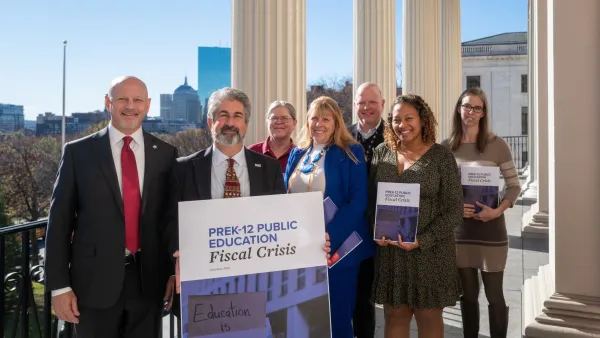
Join MTA members, parents, students, community activists, and municipal leaders from across the Commonwealth as we take strategic action to win legislative and budgetary fixes to the growing fiscal crisis impacting public schools and colleges across the Commonwealth.
2026 Meetings Include:
- February 9 with legislative remarks from Senator Comerford
- March 16 with legislative remarks from Senator Edwards
- April 13
- May 18
All are welcome!

A Diverse Union of Education Workers
The MTA represents 117,000 members in 400 local associations throughout Massachusetts. We are teachers, faculty, professional staff and Education Support Professionals working at public schools, colleges and universities across Massachusetts.