Skip Navigation
We use cookies to offer you a better browsing experience, provide ads, analyze site traffic, and personalize content. If you continue to use this site, you consent to our use of cookies.
Issue Explainer

Fiscal Crisis Campaign

Take action to win legislative and budgetary fixes to the growing fiscal crisis impacting our public schools and colleges.
Public school districts across the Commonwealth are facing severe fiscal challenges that threaten to undermine their capacity to deliver a high-quality public education to all students. While the Student Opportunity Act is providing meaningful investments in many communities, not every district has seen significant increases in state aid. Additionally, a combination of factors, including technical issues with the Chapter 70 formula, high inflation and escalating costs, have further strained local budgets. S
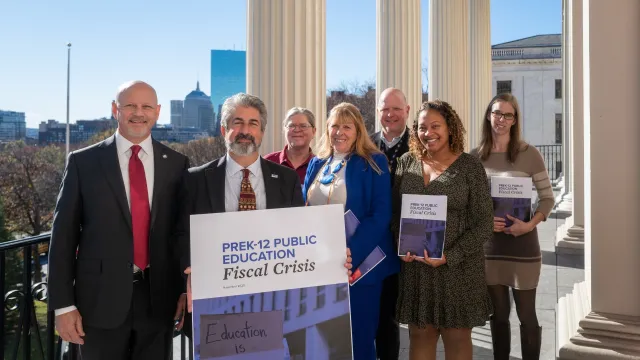
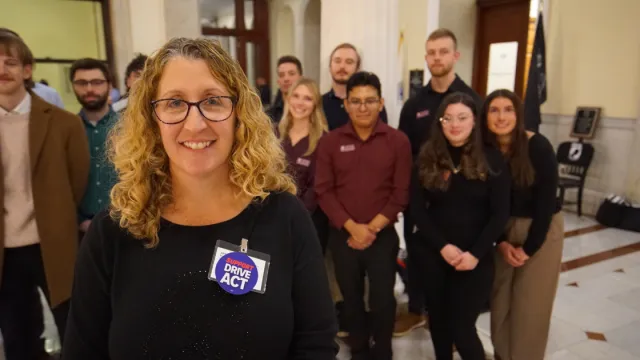
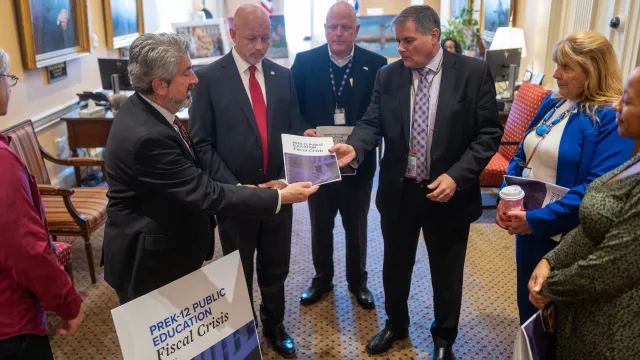
MTA members lobbying their legislators in support of MTA-supported fiscal crisis campaign bills.
Published: January 2025

Funding Our Schools to Meet the Needs of All Students

Public school districts across the Commonwealth are facing severe fiscal challenges that threaten to undermine their capacity to deliver a high-quality public education to all students. While the Student Opportunity Act is providing meaningful investments in many communities, not every district has seen significant increases in state aid. Additionally, a combination of factors, including technical issues with the Chapter 70 formula, high inflation and escalating costs, have further strained local budgets. Since fiscal challenges vary between districts, it will take a mix of solutions to ensure that every district has the resources that students and educators need to succeed.

The MTA is advocating for a comprehensive legislative and budget platform that helps address the main drivers of the fiscal crisis facing our public schools. Together, we can build on our historic victories with the Student Opportunity ActFair Share Amendment and Question 2 to make meaningful progress in advancing our shared vision for public education. We are also working to address the fiscal challenges facing our public colleges and universities so that we may ensure all students succeed and faculty and staff are paid the wages and benefits needed to recruit and retain a strong workforce. 

The Bills

These bills, filed in the 2025-26 legislative session, address the public school fiscal crisis that is undermining our capacity to deliver high-quality public education to all students.

Download a Fact Sheet on Fiscal Crisis Bills

Understanding the Funding Issues

Chapter 70 Inflation Adjustment: Due to high inflation in the previous years and the 4.5% inflation cap in the Chapter 70 funding formula, public school districts did not receive the real dollar aid they were promised under the Student Opportunity Act. Our Chapter 70 bill addresses this flaw in the formula by maintaining the 4.5% cap but ensuring that the formula makes up for lost inflation. Our estimates show how much additional state aid districts could receive in FY 2026 if this inflation issue is fixed.
Regional School Transportation: High inflation continues to drive up the cost of providing transportation to students, particularly in regional districts that cover larger geographical areas. Because the Commonwealth has historically underfunded the reimbursements relative to the total cost borne by the districts, our bill calls for a 100% reimbursement of regional school transportation costs. Our estimates show the increase in regional transportation reimbursement from 87% to 100% for FY 2025.
In-District School Transportation: Currently, non-regional school districts do not receive reimbursements for the transportation costs associated with regular day and in-district special education programs. Our proposed legislation gives school districts 25% reimbursement for regular day and in-district special education transportation costs in FY2026.
Rural School Aid: Rural schools often have high operating costs which are mostly related to not having the same economies of scale as other non-rural districts. These estimates show the increases for districts if rural school aid is increased from $16 million to $60 million in FY 2025, as provided for in the MTA-backed bill.
Special Education Circuit Breaker: Special education costs have been increasing significantly, stretching local school district budgets. The current reimbursement program has proven inadequate in covering local district costs, especially out-of-district transportation costs. Our estimates reflect the increase in reimbursement amounts that districts would receive based on the MTA-backed legislation, which lowers the cost eligibility threshold and increases the reimbursement rates for tuition and transportation costs from 75% to 90% for FY 2025.
Whole Child Grant Program: There is a mental health crisis in Massachusetts public schools that has been intensified by the impacts of the pandemic and that continues to impact students’ ability to learn and educators’ ability to teach. Our legislation creates a grant program to provide per pupil funding to each school district – with districts with higher percentages of low-income students receiving the highest per pupil amounts. See the spreadsheet for estimated grant amounts for FY 2026.
Charter School Reimbursement: Public school districts are required to pay charter schools a corresponding tuition amount when a student leaves a public school to attend a charter school. This significantly stresses the budgets of impacted districts. The estimates here show how much additional funding public school districts could receive in FY 2025 with our bill, which proposes adding a fourth year of funding with reimbursement rates at 100% of any tuition increase in the first year, 80% in the second year, 60% in the third year, and 40% in the fourth year.
Minimum Aid: Many minimum aid school districts, which represent a significant portion of all school districts, face similar fiscal challenges to non-minimum aid districts but only receive a modest per-pupil increase in Chapter 70 funding. Many of the proposals mentioned above will provide immediate and long-term relief to these districts but increasing Chapter 70 minimum to $150 is a critical piece in ensuring that all students and educators in Massachusetts have the resources they need. The estimates in the spreadsheet show the increase in minimum aid amounts that districts could receive under this proposal in FY 2026.

How much additional funding could your district receive?

These numbers give a better sense of how your district would benefit from MTA-backed proposals aimed at addressing the fiscal crisis currently facing our schools. These are rough estimates based on existing data that is often several years old and will change. These are not projections of actual likely aid.

Today, a delegation met with the governor's staff to deliver a letter calling for an immediate fix to the statewide school funding crisis.

Leaders Urge Action on School Funding

More than 1,000 leaders from across Massachusetts are calling for a fix to state education funding.
A new coalition says Massachusetts school districts don’t have enough money.

Diverse coalition urges governor, lawmakers to address public school funding crisis

The coalition is calling for immediate action to address the funding crisis.
MTA president's statement on Senate BRIGHT Act vote

MTA president's statement on Senate BRIGHT Act vote

The BRIGHT Act, when combined with Fair Share investments in making public college closer to debt-free for working-class students, is a commitment to the common good that Massachusetts can be proud of.

Get Involved

Join a Fiscal Action Team to connect and organize with educators and activists who are fighting for the funding our schools deserve. Meetings are held monthly on Zoom.

State Budget News

The MTA's education policy staff analyzes education and related funding in every phase of the state budget process.
Massachusetts Teachers Association logo

A Diverse Union of Education Workers

The MTA represents 117,000 members in 400 local associations throughout Massachusetts. We are teachers, faculty, professional staff and Education Support Professionals working at public schools, colleges and universities across Massachusetts.